18 Minimalist Kitchen Design Ideas
A kitchen is one of the most used spaces in any home, but it can quickly become cluttered and overwhelming if not designed properly. Many people struggle with limited space, too many items, and a lack of organization. This is where minimalist kitchen design ideas can make a real difference.
Minimalist design focuses on simplicity, functionality, and clean aesthetics. It helps you create a kitchen that looks modern while also being easy to use and maintain. By reducing unnecessary elements and focusing on essential features, you can transform your kitchen into a calm and efficient space. In this guide, you will discover practical and stylish ideas that help you design a minimalist kitchen that works in real life.
Understanding the Concept of Minimalist Kitchen Design
Minimalist kitchen design is not about removing everything from your kitchen. Instead, it is about keeping only what is useful and meaningful while maintaining a clean and organized look.
The main goal is to create a space that feels open and uncluttered. This is achieved through simple layouts, neutral color palettes, and smart storage solutions. For example, using white or light colored cabinets can make the kitchen feel larger and brighter. Hidden storage helps reduce visual clutter, while sleek appliances maintain a modern appearance.
Another important aspect is functionality. Every item in a minimalist kitchen should have a purpose. This approach not only improves the look of the kitchen but also makes daily tasks easier. When everything is organized and easy to access, cooking and cleaning become more enjoyable.
Practical Minimalist Kitchen Design Inspirations
1. All White Kitchen Design
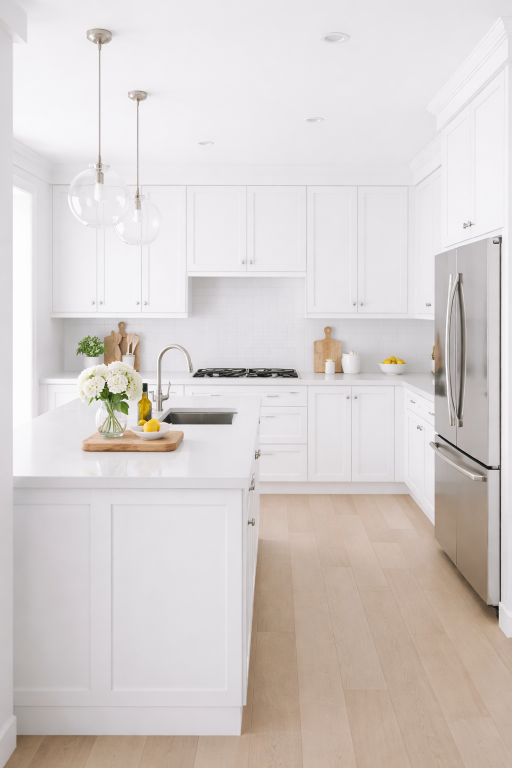
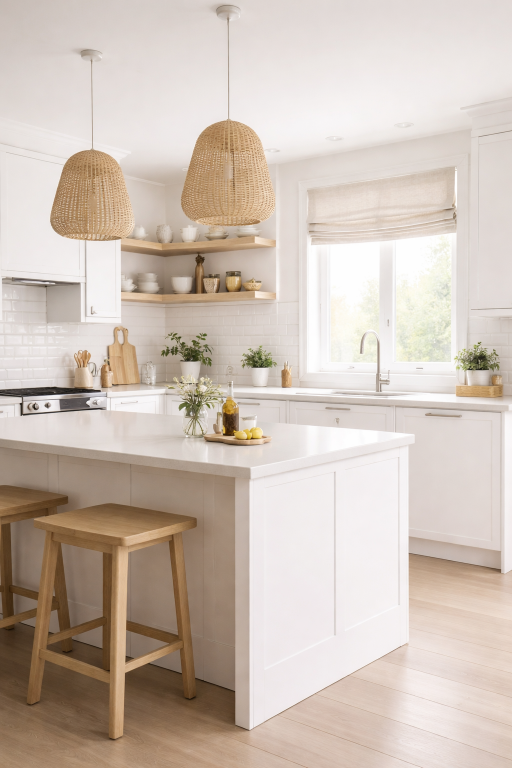
An all white kitchen is one of the most popular minimalist styles because it instantly creates a clean and open look. White surfaces reflect light, which makes even a small kitchen feel bigger and brighter. This is especially helpful if your kitchen has limited windows or natural light. The uniform color also reduces visual noise, making the space feel calm and organized.
To make it practical, you can combine white cabinets with light countertops and simple flooring. If everything feels too plain, you can add small elements like wooden stools or a plant for warmth. This design works best for small homes or apartments where space needs to feel open and uncluttered.
2. Handleless Cabinets for Clean Look
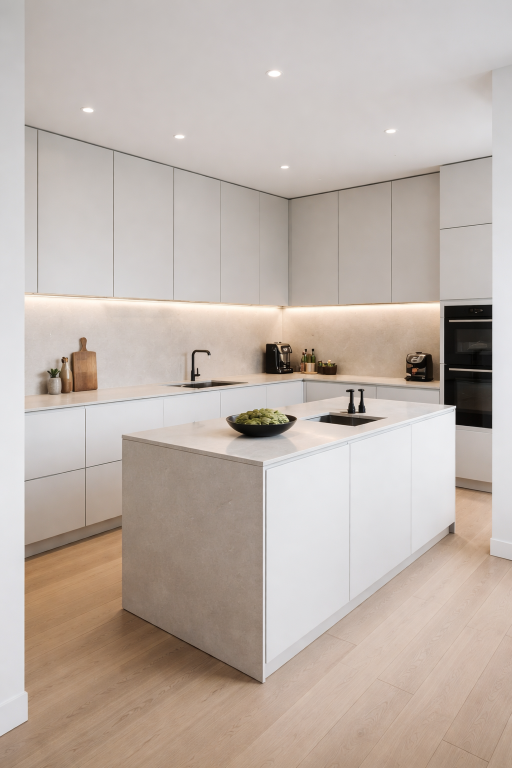
Handleless cabinets are a key feature of modern minimalist kitchens. Without handles, the surfaces look smooth and uninterrupted, which creates a neat and elegant appearance. This small design change makes a big difference in reducing visual clutter and keeping the kitchen simple.
In real use, push to open cabinets or hidden grooves make it easy to open drawers without handles. This style is perfect for people who like a sleek and modern look. It also makes cleaning easier because there are no handles collecting dust or grease.
3. Hidden Storage Solutions
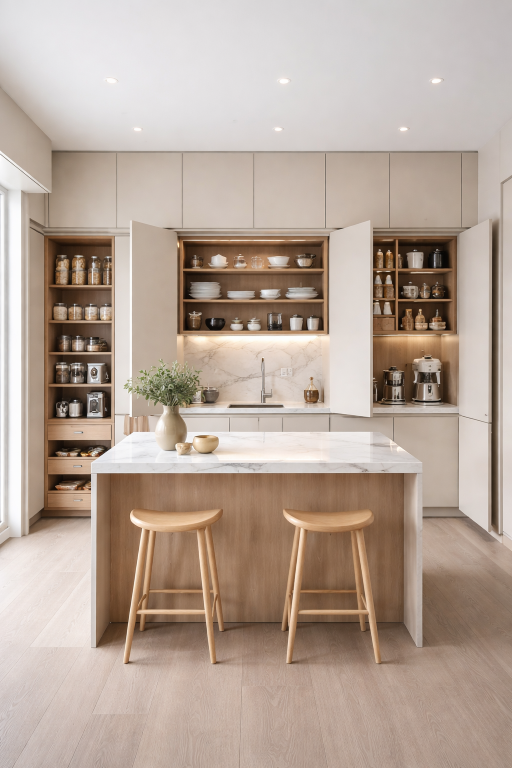
Hidden storage is essential in a minimalist kitchen because it keeps everything out of sight. When items like utensils, appliances, and groceries are stored inside cabinets, the kitchen looks clean and organized. This helps maintain a clutter free environment.
For example, you can use deep drawers, pull out cabinets, or built in pantry spaces. This idea works well for families who have many kitchen items but still want a simple design. It allows you to keep everything you need without making the space look crowded.
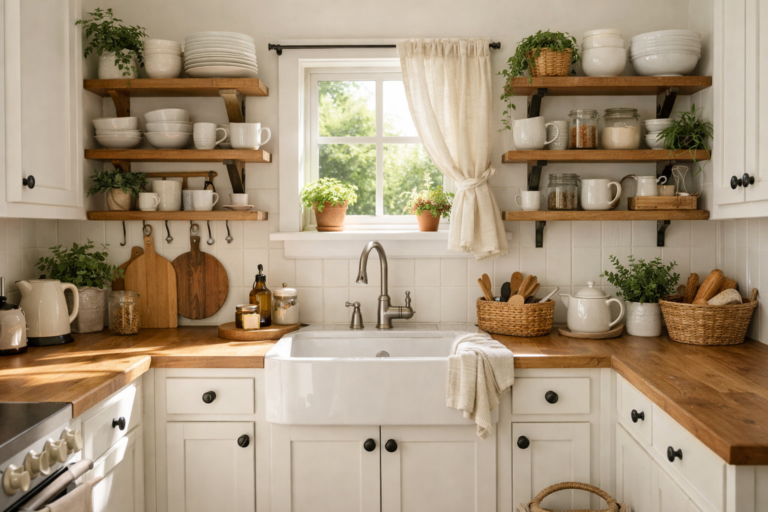
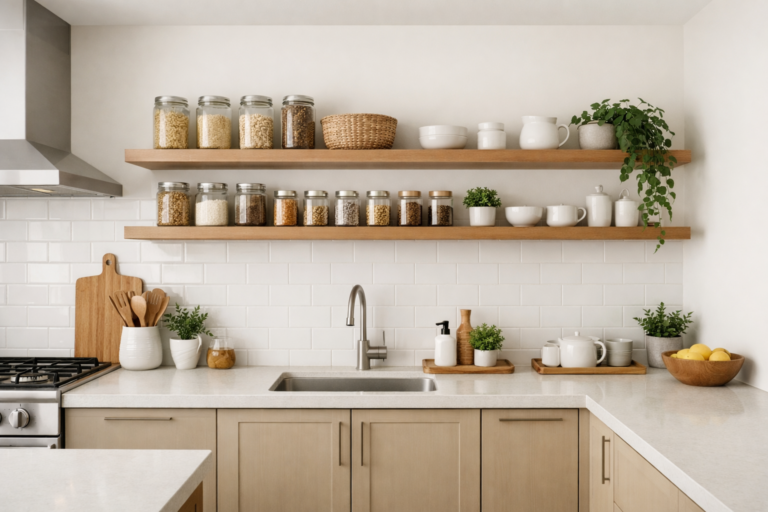
4. Open Shelving with Limited Items
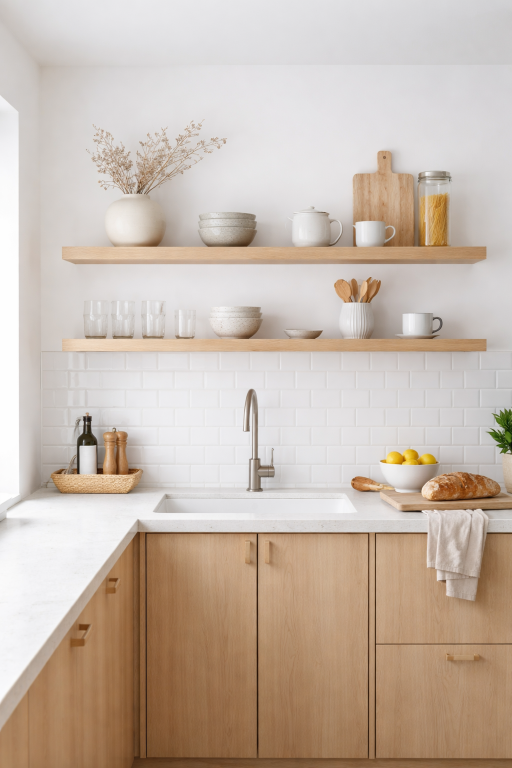
Open shelving can look beautiful in a minimalist kitchen if used carefully. Instead of filling shelves with many items, you only display a few essential or decorative pieces. This keeps the look clean while still adding personality to the space.
For example, you can place a few plates, cups, or jars in a neat arrangement. This idea is great for people who want easy access to daily items while maintaining a stylish look. The key is to avoid overcrowding and keep everything organized.
5. Neutral Color Palette
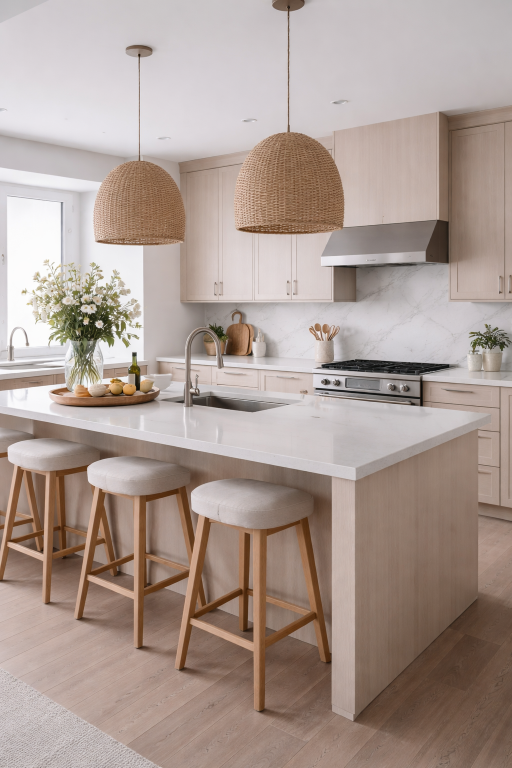
Neutral colors like white, grey, and beige create a calm and relaxing kitchen environment. These colors work well together and make the space feel balanced. They also allow other elements like lighting or textures to stand out without overwhelming the design.
This approach is ideal for long term use because neutral colors never go out of style. You can easily change small details like decor or accessories without redesigning the entire kitchen. It is perfect for people who want a timeless and simple look.
6. Simple Lighting Design
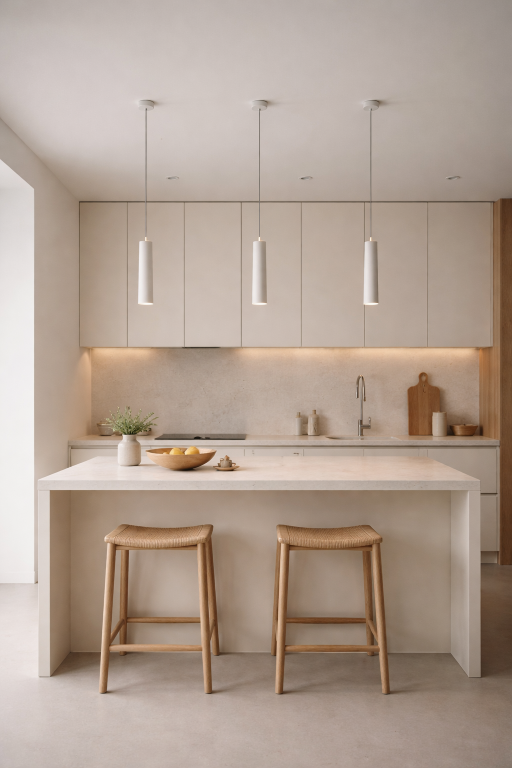
Lighting plays an important role in minimalist kitchens. Simple lighting designs such as pendant lights or recessed lights provide enough brightness without adding too much decoration. This keeps the focus on functionality.
For example, soft warm lights can make the kitchen feel cozy, while brighter lights help during cooking. Choosing simple fixtures ensures that the design remains clean and modern. This idea works well for both small and large kitchens.
7. Clutter Free Countertops
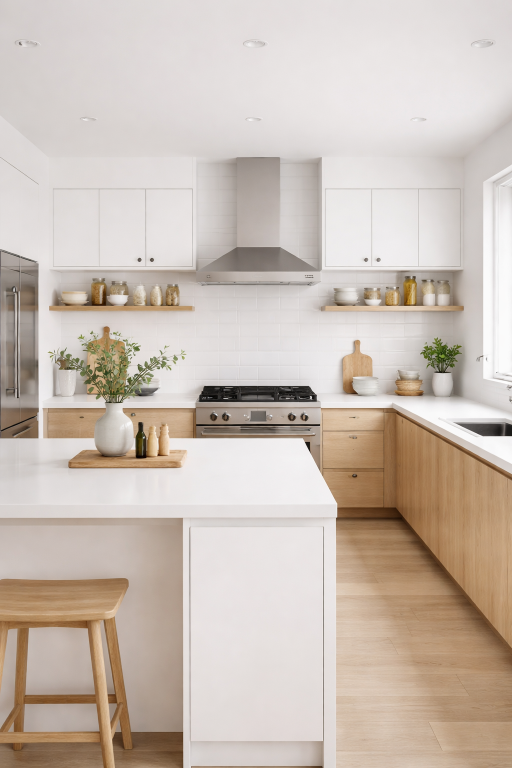
Keeping countertops empty is one of the easiest ways to achieve a minimalist look. When too many items are placed on the counter, the kitchen looks messy and crowded. A clean surface instantly makes the space feel organized.
In daily life, you can store appliances and tools inside cabinets instead of leaving them outside. This approach is perfect for busy families because it makes cleaning easier and keeps the kitchen looking neat all the time.
8. Integrated Appliances
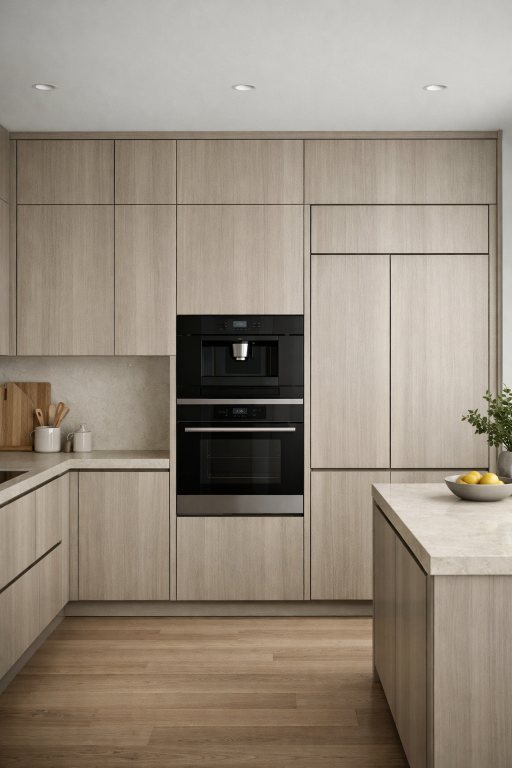
Integrated appliances are designed to blend with cabinets, creating a seamless look. Instead of standing out, they become part of the overall design. This reduces visual clutter and makes the kitchen look more modern.
For example, a built in fridge or oven that matches cabinet color can make a big difference. This idea is ideal for people who want a high end and polished kitchen appearance.
9. Minimal Decor Elements
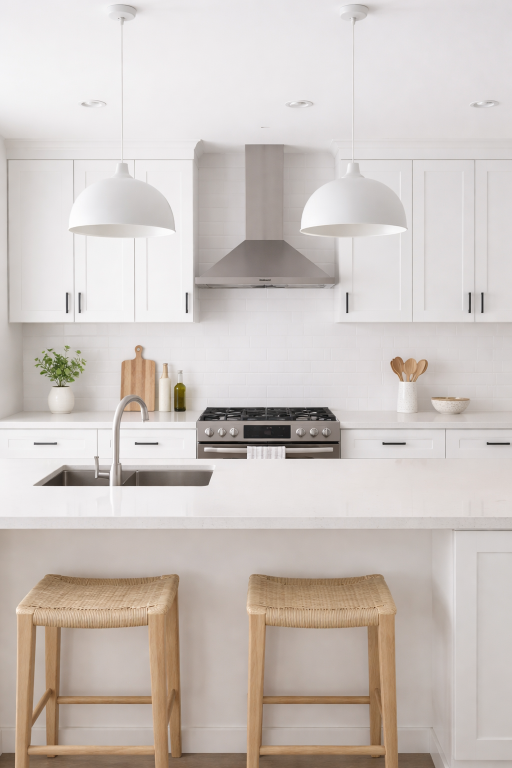
Minimalist kitchens focus on function, but a small amount of decor can add warmth. Simple items like a plant, vase, or bowl can make the space feel more inviting without making it cluttered.
The key is to choose only a few items and place them carefully. This works well for people who want a balance between simplicity and style.
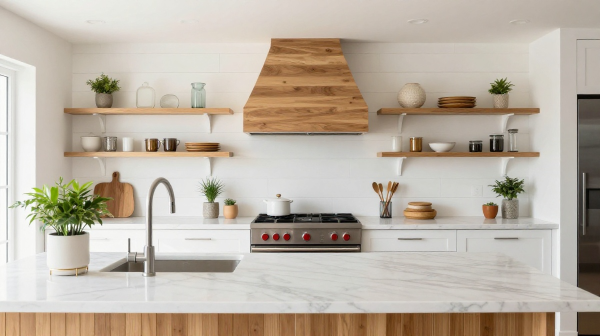
10. Natural Materials for Warmth
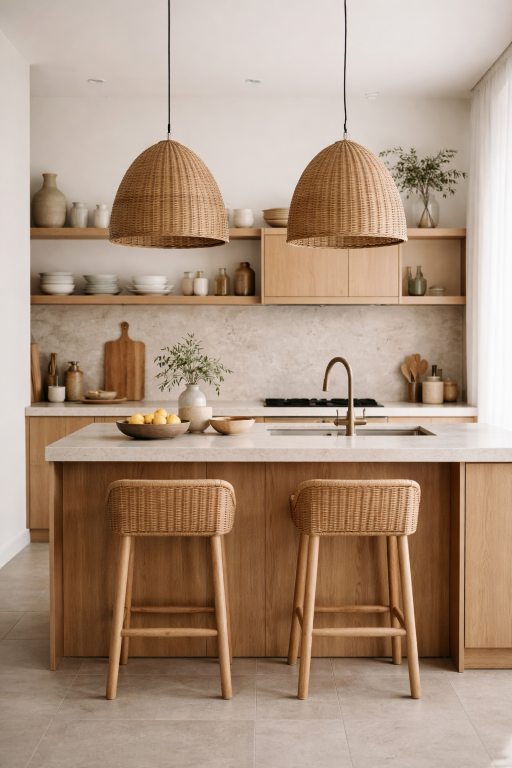
Using natural materials like wood or stone adds warmth to a minimalist kitchen. Without these elements, the space can feel too cold or plain.
For example, wooden cabinets or a stone countertop can create a cozy feeling. This idea is perfect for those who want a natural and comfortable environment.
11. Compact Kitchen Island
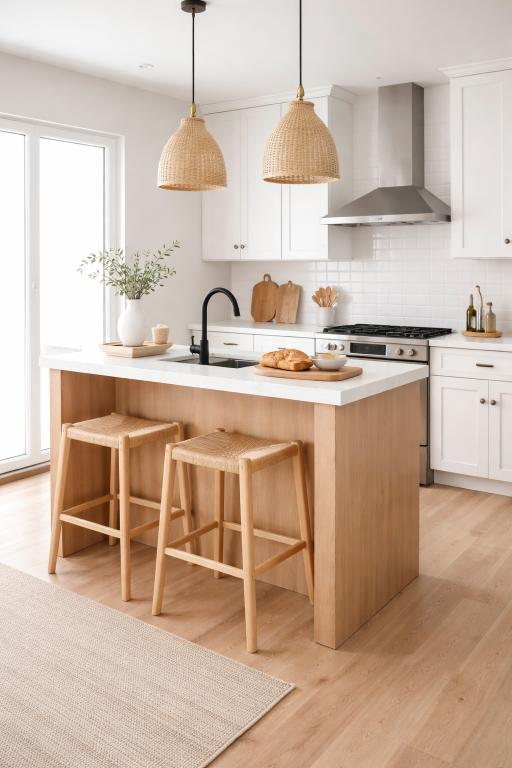
A small kitchen island can add both function and style. It provides extra space for cooking, storage, or even dining without taking too much room.
This works well in medium sized kitchens. A simple and clean island design keeps the minimalist look while improving usability.
12. Smart Storage Drawers
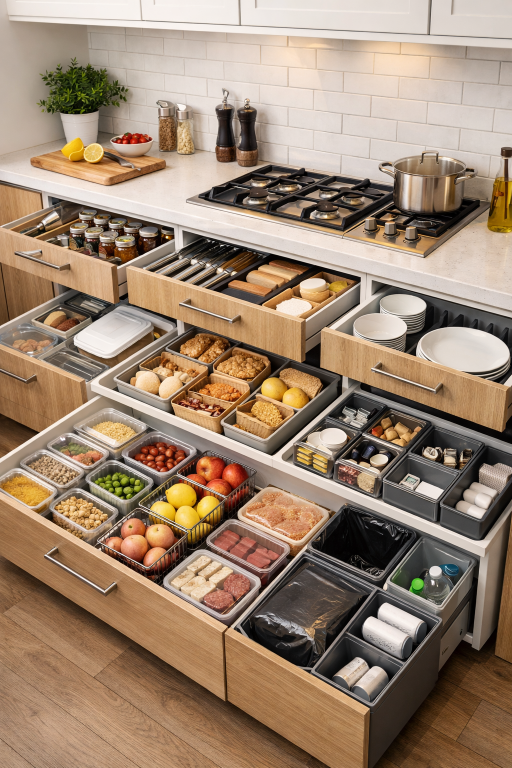
Organized drawers make a big difference in keeping the kitchen clean. Dividers and compartments help store items properly and make them easy to find.
This idea is great for families who want an efficient kitchen. It reduces time spent searching for items and keeps everything in place.
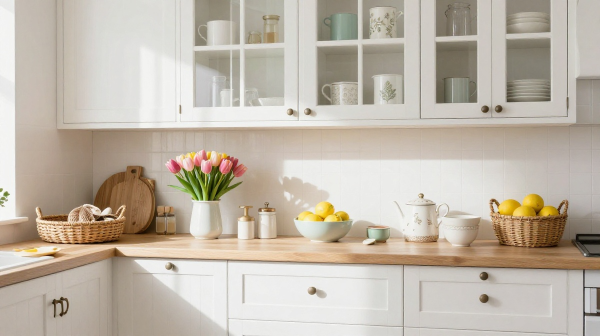
13. Glass Cabinet Doors
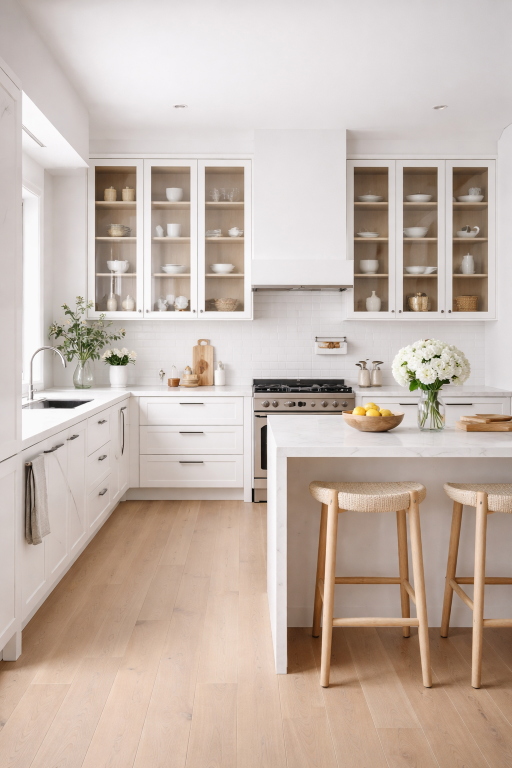
Glass cabinet doors make the kitchen feel lighter and more open. They reduce the heavy look of solid cabinets and add a modern touch.
This works well in small kitchens where space feels tight. Keeping items inside neat is important because they are visible.
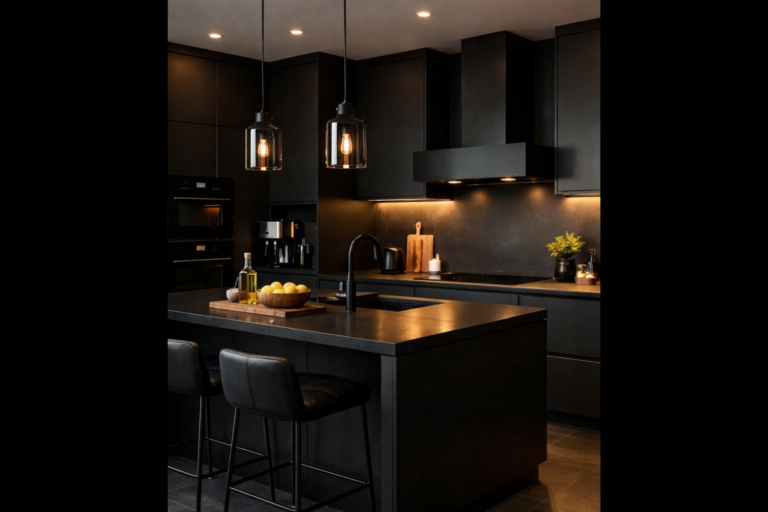
14. Monochrome Color Scheme
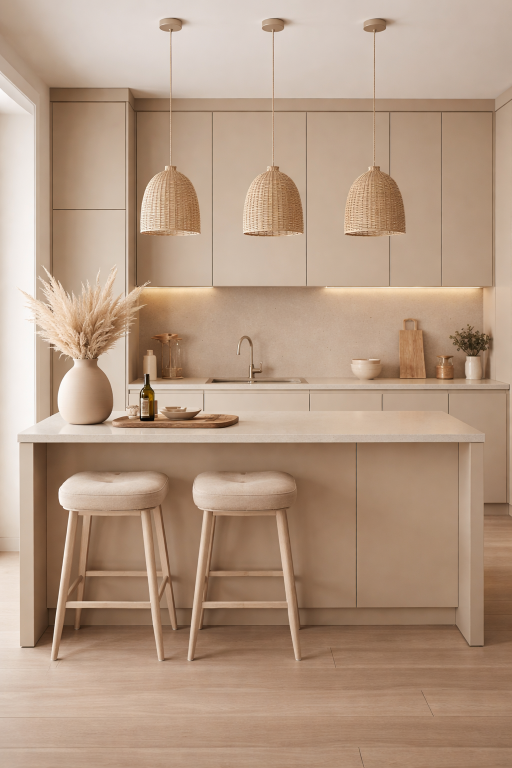
Using one color in different shades creates a simple and stylish design. It keeps the kitchen cohesive without adding too many colors.
For example, using different shades of grey can create depth while maintaining a clean look. This is ideal for modern homes.
15. Minimal Backsplash Design
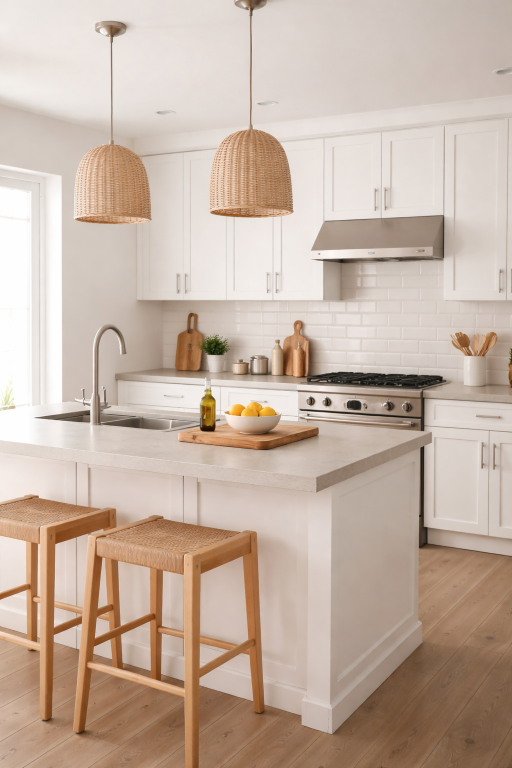
A simple backsplash keeps the design clean and uncluttered. Plain tiles or smooth surfaces work best in minimalist kitchens.
This idea helps maintain focus on the overall layout instead of adding too many details.
16. Slim Furniture and Fixtures
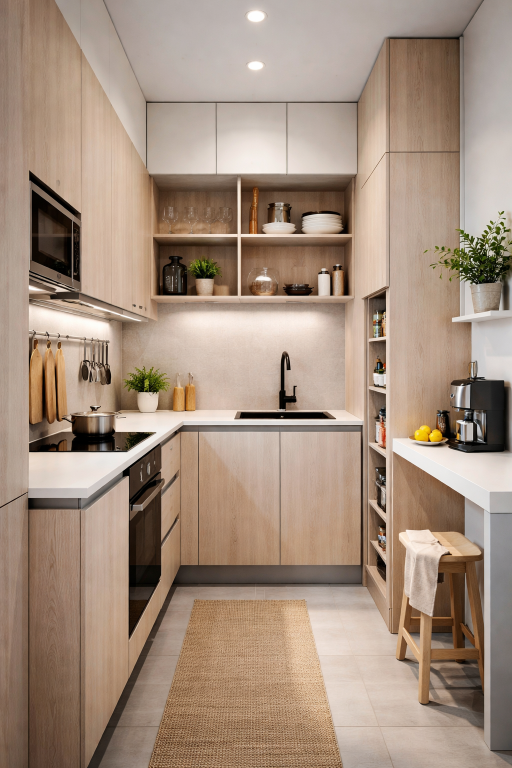
Slim designs take up less space and make the kitchen feel more open. Thin countertops and compact furniture help improve movement.
This is especially useful for small kitchens where space is limited.
17. Efficient Layout Planning
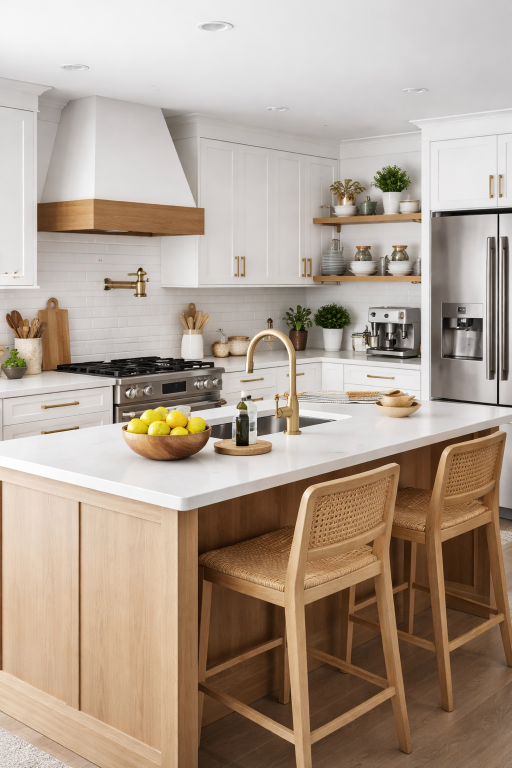
A well planned layout ensures everything is within reach. This improves functionality and reduces unnecessary movement.
For example, placing the sink, stove, and fridge close together makes cooking easier.
18. Declutter Regularly
Minimalism is not just about design but also maintenance. Regular decluttering helps keep the kitchen clean and organized.
Removing unused items ensures the space stays functional and visually appealing over time.
Practical Tips for Maintaining a Minimalist Kitchen
Start by decluttering your kitchen and removing items you rarely use. Keep only essential tools and organize them properly. Use storage solutions like drawers, cabinets, and organizers to keep everything in place.
Choose simple and durable materials that are easy to clean. Avoid adding too many decorative items. Instead, focus on functionality and comfort.
Lighting should be soft and balanced to create a welcoming environment. Regular cleaning and maintenance help preserve the minimalist look.
Common Mistakes to Avoid
One common mistake is removing too much and making the kitchen feel empty or uncomfortable. Minimalism should still feel warm and functional.
Another mistake is ignoring storage. Without proper storage, clutter will quickly return. Poor lighting choices can also affect the overall look.
Overusing one color without variation can make the kitchen look dull. Balance simplicity with subtle design elements to keep it visually appealing.
Conclusion
Minimalist kitchen design is about creating a space that is simple, functional, and visually pleasing. By focusing on clean layouts, smart storage, and essential elements, you can transform your kitchen into an efficient and stylish area.
These minimalist kitchen design ideas provide practical inspiration that can be applied in real homes. With careful planning and consistent maintenance, you can enjoy a kitchen that is both beautiful and easy to use.
FAQs
1. What is a minimalist kitchen
A minimalist kitchen focuses on simplicity, clean design, and functional layout with minimal clutter.
2. How do I start designing a minimalist kitchen
Begin by decluttering, choosing neutral colors, and using smart storage solutions.
3. Are minimalist kitchens suitable for small spaces
Yes, they are ideal because they make small spaces look larger and more organized.
4. What colors are best for minimalist kitchens
Neutral colors like white, grey, and beige work best for a clean and calm look.
5. How do I keep my kitchen clutter free
Use proper storage, avoid unnecessary items, and organize regularly.