20 minimal living room design ideas
Creating a calm and clutter-free space can feel difficult, especially when your living room is filled with furniture, decor, and everyday items. Many people want a clean and stylish home but struggle to balance simplicity with comfort. This is where minimal living room design ideas can completely transform your space.
Minimal design is not about removing everything. It is about choosing the right things and placing them thoughtfully. A well-designed minimal living room feels open, peaceful, and functional. In this guide, you will discover practical ideas that help you design a space that looks beautiful while making your daily life easier.
What Defines a Minimal Living Room Style
A minimal living room focuses on simplicity, functionality, and intentional design. Instead of filling the room with many items, you keep only what is necessary and meaningful. This creates a space that feels calm and organized.
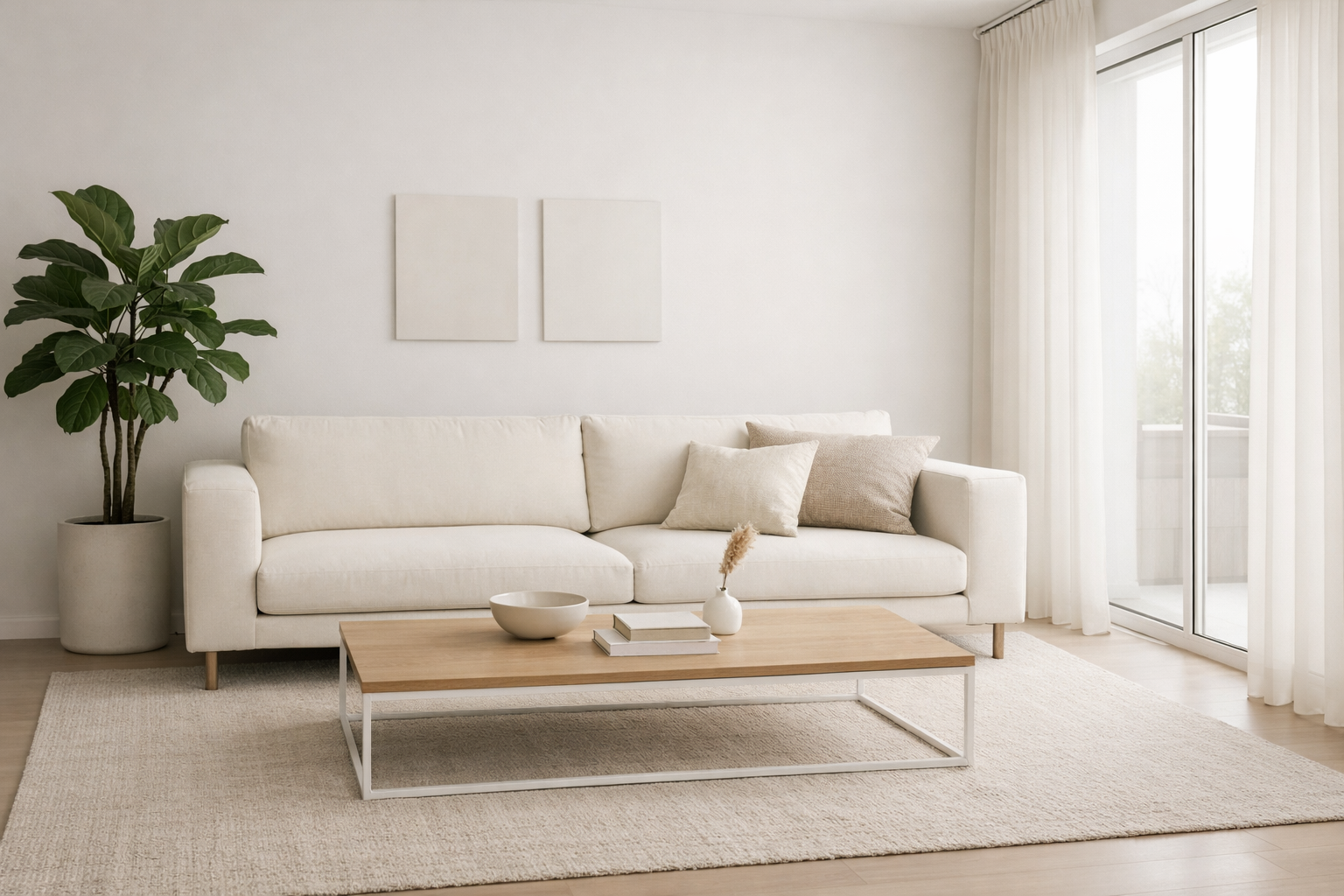
The key elements include neutral colors, clean lines, and functional furniture. For example, a simple sofa, a small coffee table, and soft lighting can create a complete look without overcrowding the room. The goal is to make your living room feel open and comfortable.
Another important aspect is space. Minimal design allows breathing room between furniture pieces. This makes even small living rooms feel larger and more inviting. By focusing on quality over quantity, you create a space that is both practical and visually appealing.
Simple and Stylish Minimal Living Room Concepts
1. Neutral Color Palette
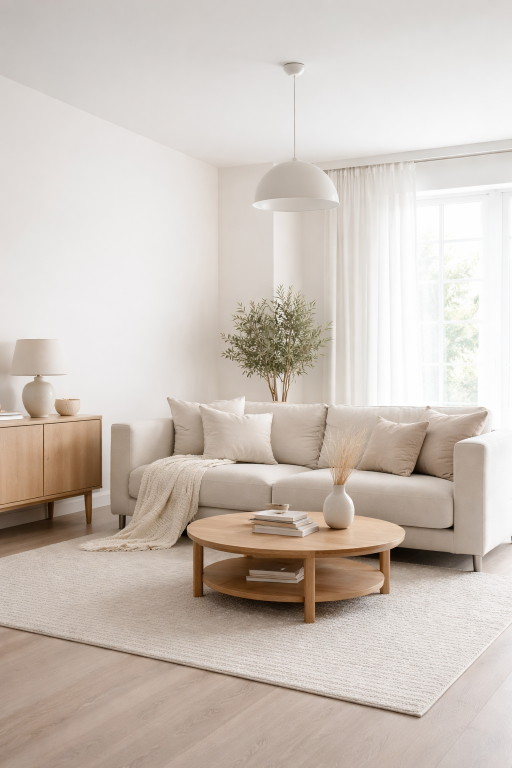
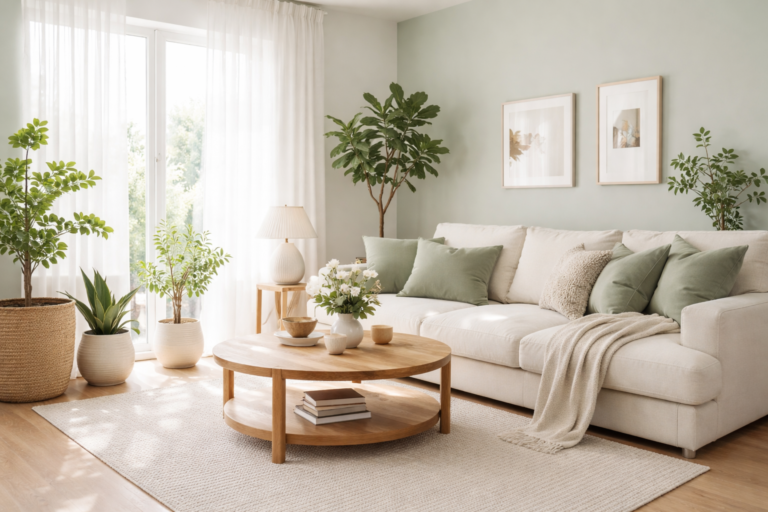
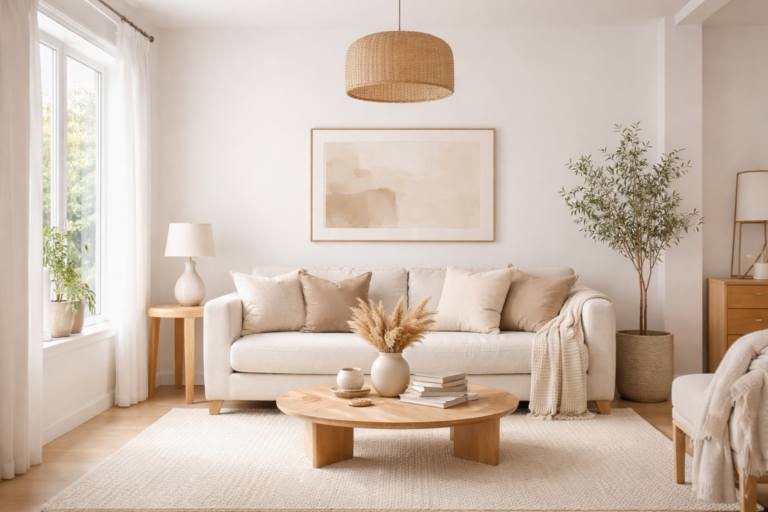
A neutral color palette is the foundation of any minimal living room. Colors like white, beige, soft gray, and light cream create a calm and open atmosphere. These shades reflect light, which makes your space feel bigger and brighter without adding any visual noise.
This idea works especially well if your living room is small. For example, if your family sits together in the evening, a light-colored room feels more peaceful and relaxing. You can add small accents like cushions or a rug in slightly darker shades to keep the room interesting without losing the minimal look.
2. Low Profile Furniture
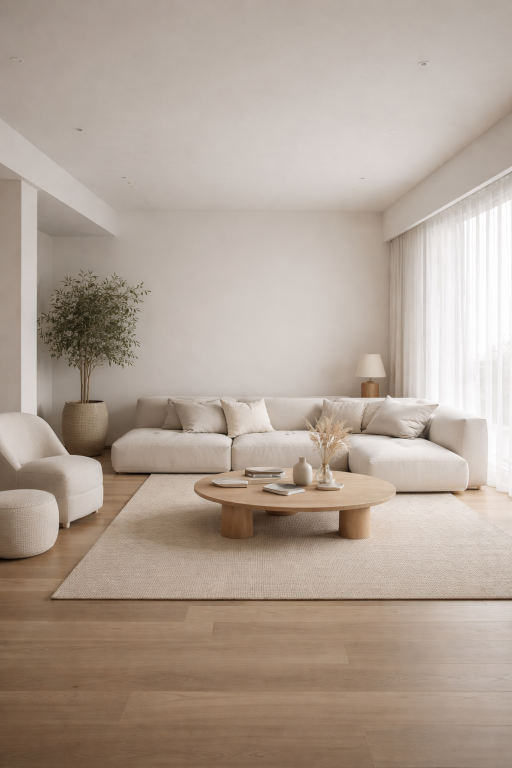
Low profile furniture means choosing sofas and tables that sit closer to the ground. This creates an illusion of higher ceilings and makes your living room feel more spacious and modern.
For example, instead of a bulky sofa, you can use a sleek, low-height couch. This is helpful in homes where space is limited because it keeps the room visually open. It also makes the area feel less crowded, even when multiple people are sitting together.
3. Decluttered Surfaces
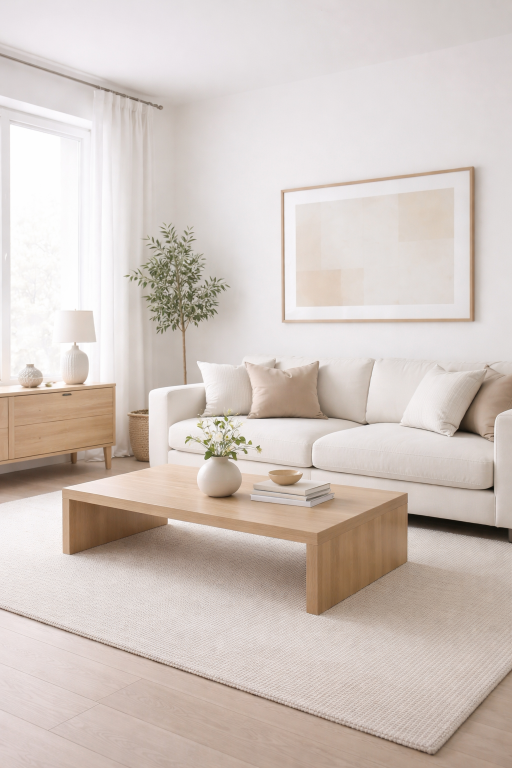
Keeping surfaces clean is one of the most important parts of minimal design. Coffee tables, side tables, and shelves should not be overloaded with items. Instead, keep only one or two meaningful pieces.
For example, instead of placing many items on the table, you can keep a small plant or a simple decor piece. This makes cleaning easier and gives your living room a neat and organized look that feels calm and stress-free.
4. Functional Furniture
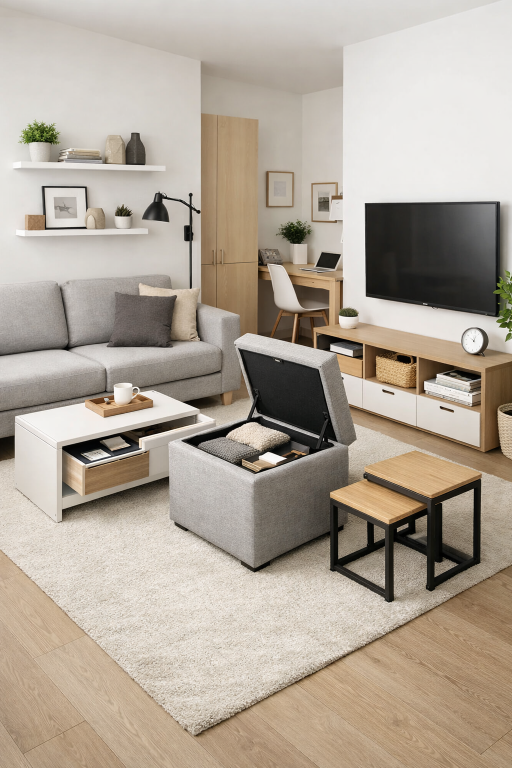
Functional furniture means every item in your living room has a purpose. This includes pieces like storage ottomans or sofas with hidden compartments.
For example, you can store blankets inside an ottoman. This is very useful in family homes because it reduces clutter while keeping important items easily accessible. It helps your space stay clean without sacrificing comfort.
5. Soft Lighting Layers
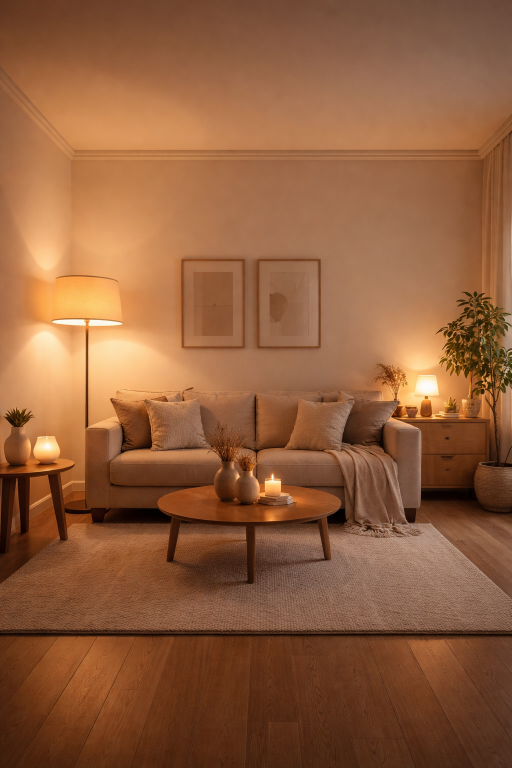
Lighting plays a huge role in creating a minimal atmosphere. Instead of using one bright light, you can use multiple soft light sources like floor lamps or table lamps.
For example, in the evening, soft lighting makes the room feel cozy when your family is relaxing or watching TV. It creates a warm and inviting environment without making the space feel harsh or overly bright.
6. Simple Wall Decor
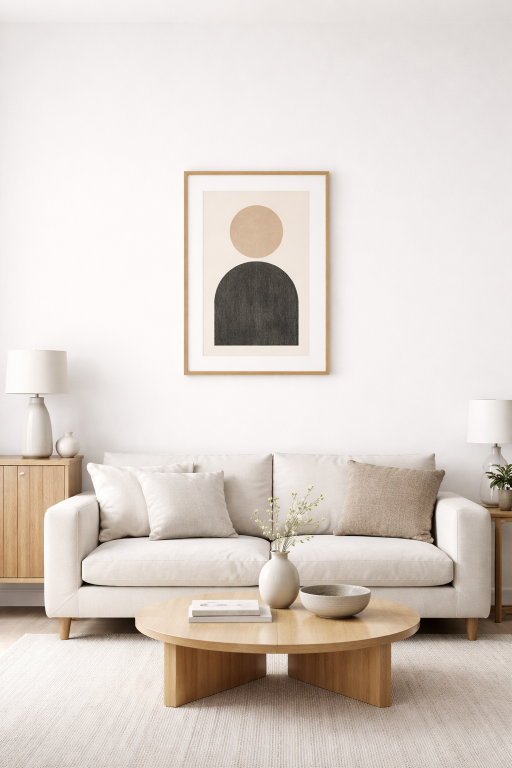
Minimal design does not mean empty walls, but it does mean controlled decoration. Instead of filling walls with many frames, choose one or two statement pieces.
For example, a single large artwork or a simple frame can become the focus of the room. This keeps your space looking elegant and prevents it from feeling cluttered or overwhelming.
7. Natural Elements
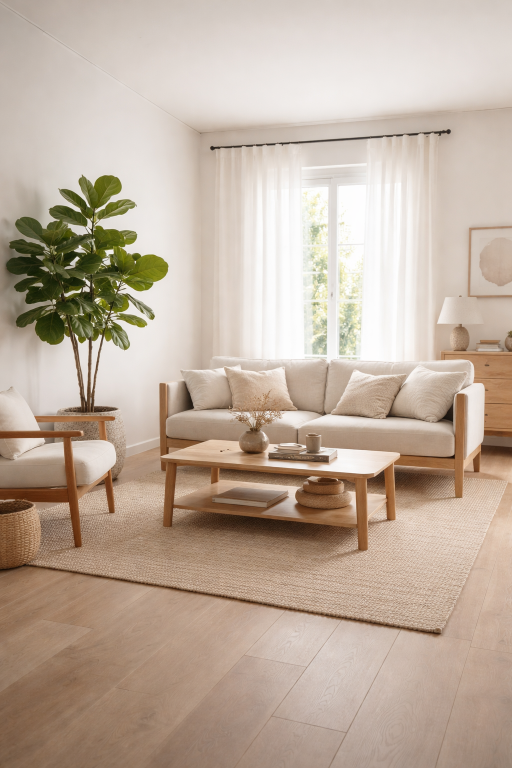
Adding natural elements like plants, wood, or stone textures brings life into a minimal living room. These elements make the space feel warm and welcoming.
For example, placing a small indoor plant near your seating area can make your room feel fresh and relaxing. It also improves the overall look without adding too much decoration.
8. Open Space Layout
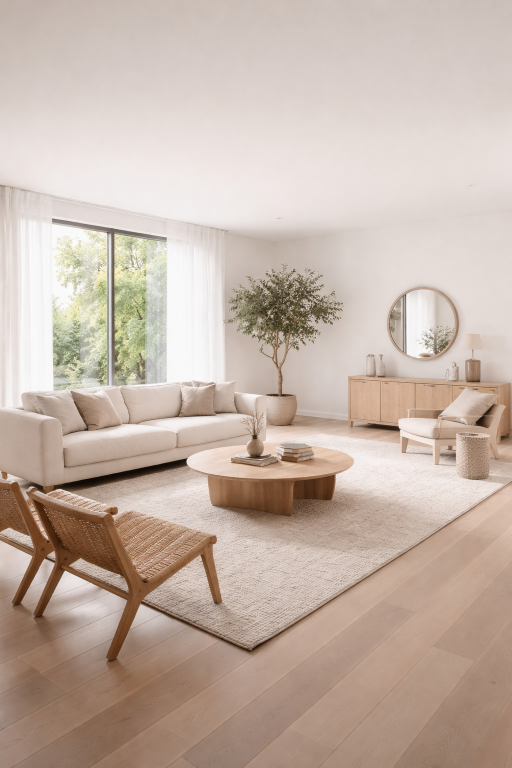
A minimal living room should feel open and easy to move around in. Avoid placing furniture too close together or blocking pathways.
For example, leaving space between your sofa and table allows your family to move freely. This makes your living room more comfortable and visually appealing.
9. Hidden Storage
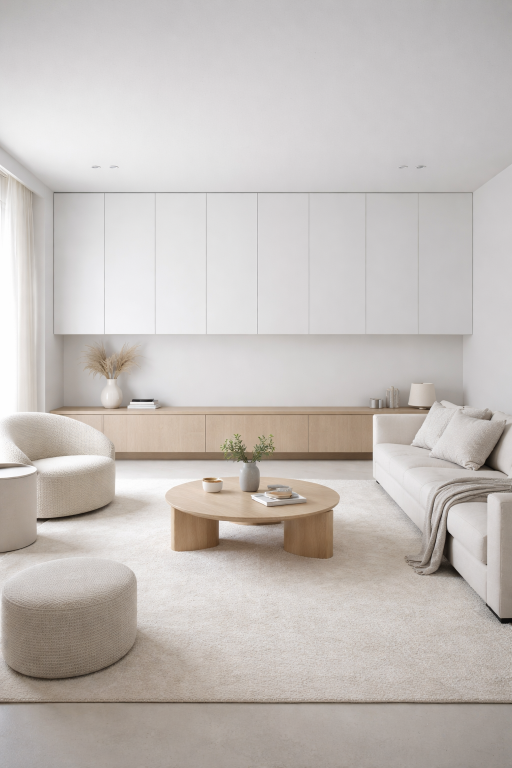
Hidden storage helps keep your living room clutter-free. Cabinets with doors or furniture with storage compartments keep items out of sight.
For example, you can store extra items like books or remote controls inside cabinets. This keeps your space clean while still being practical for daily use.
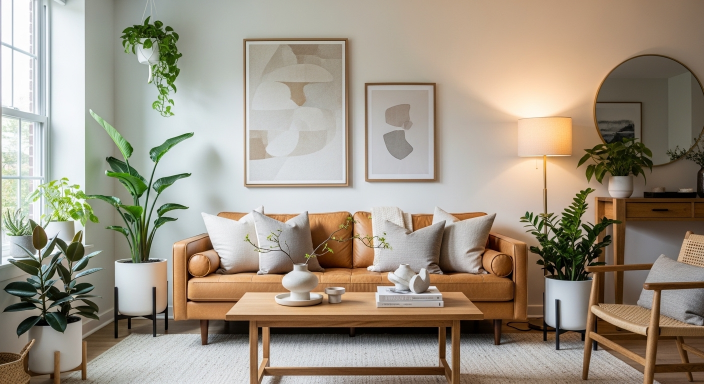
10. Statement Sofa
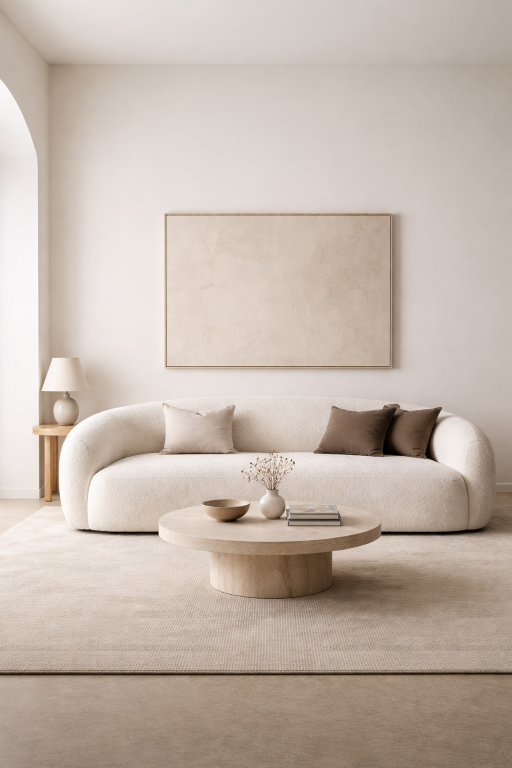
In minimal design, one strong focal point is better than many small decorations. A statement sofa can act as the main highlight of your living room.
For example, a simple but elegant sofa in a neutral color can define the entire space. This allows you to keep the rest of the room simple while still looking stylish.
11. Light Curtains
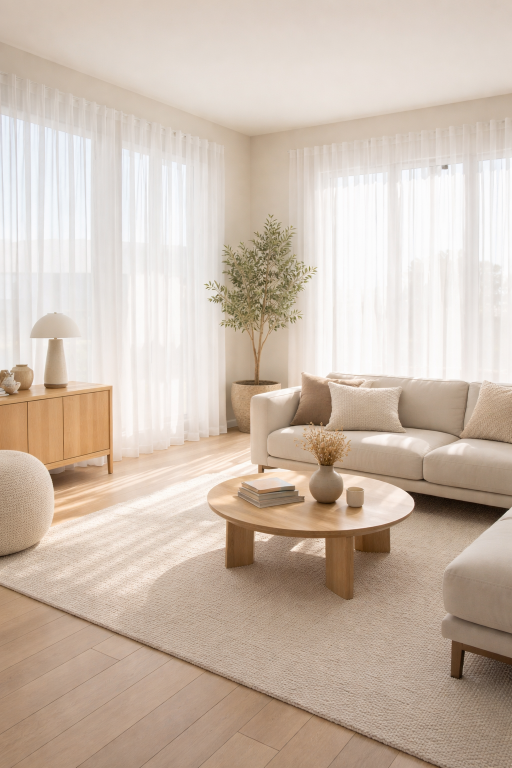
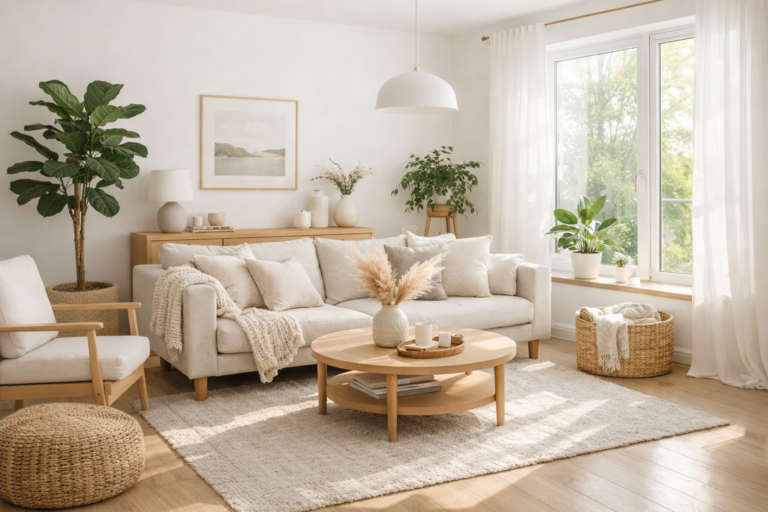
Light curtains allow natural sunlight to enter your room, making it feel brighter and more open. Heavy curtains can make the space feel smaller and darker.
For example, sheer curtains create a soft glow during the day. This makes your living room feel calm and airy, perfect for relaxing with your family.
12. Minimal Rugs
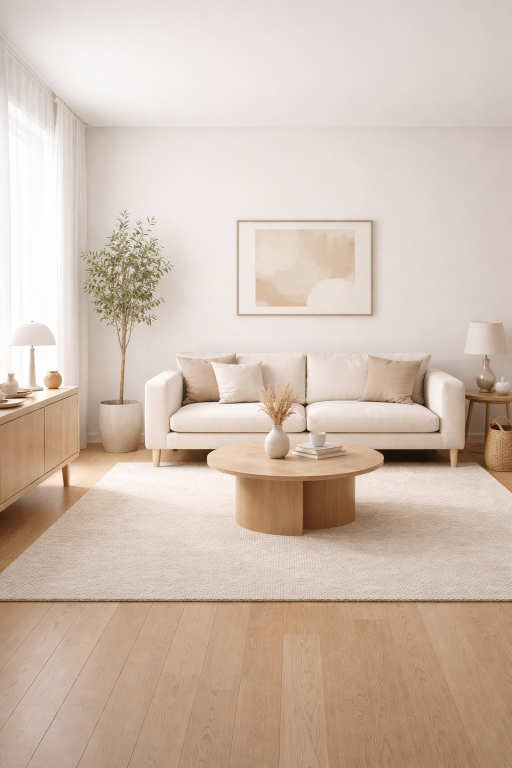
A rug can add comfort and warmth without making the room feel busy. Choose simple designs with neutral colors.
For example, placing a soft rug under your coffee table creates a cozy sitting area. It also helps define the space without adding clutter.
13. Monochrome Theme
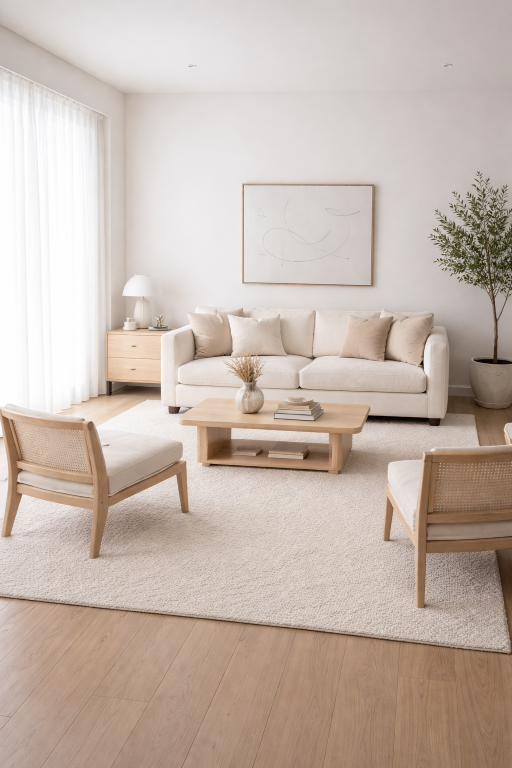
A monochrome theme uses different shades of the same color. This creates a clean and cohesive look.
For example, using different tones of gray in your sofa, cushions, and walls gives your living room depth while keeping it simple and stylish.
14. Floating Shelves
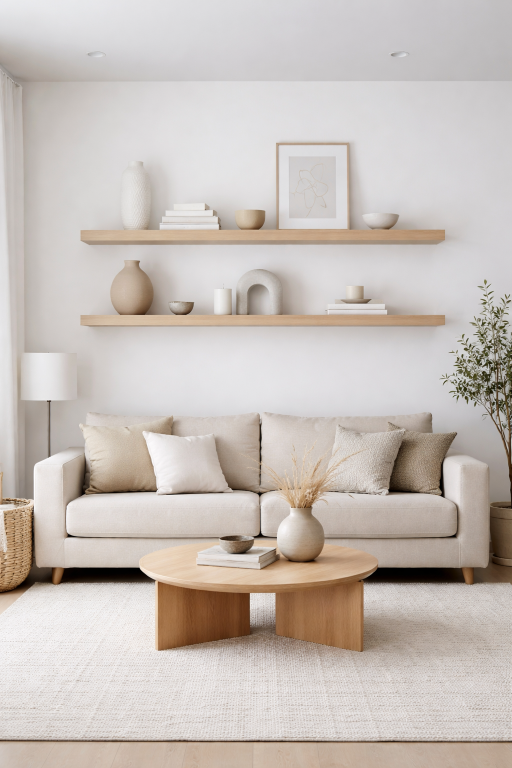
Floating shelves are a great way to add storage without making your room look heavy. They keep the design clean and modern.
For example, you can place a few books or small decor items on the shelves. This keeps your items organized while maintaining a minimal look.
15. Compact Furniture
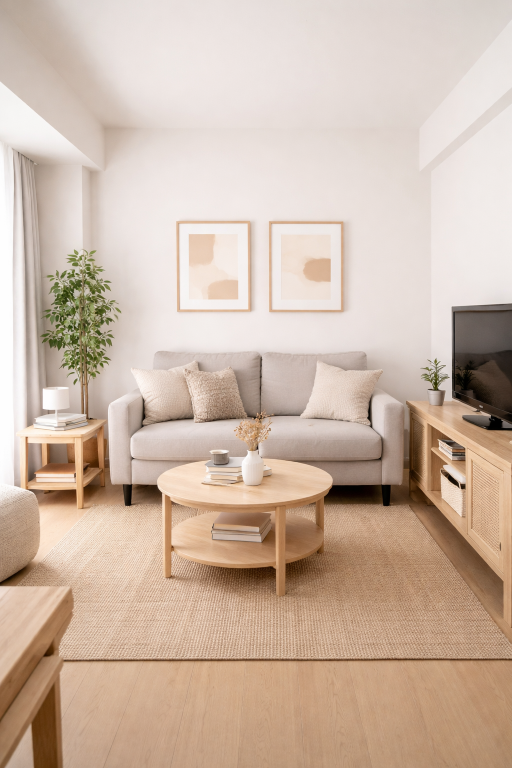
Compact furniture is perfect for small living rooms. It helps you save space while still providing comfort.
For example, a small sofa or a slim table can fit easily without making the room feel crowded. This is ideal for homes with limited space.
16. Clean Lines Design
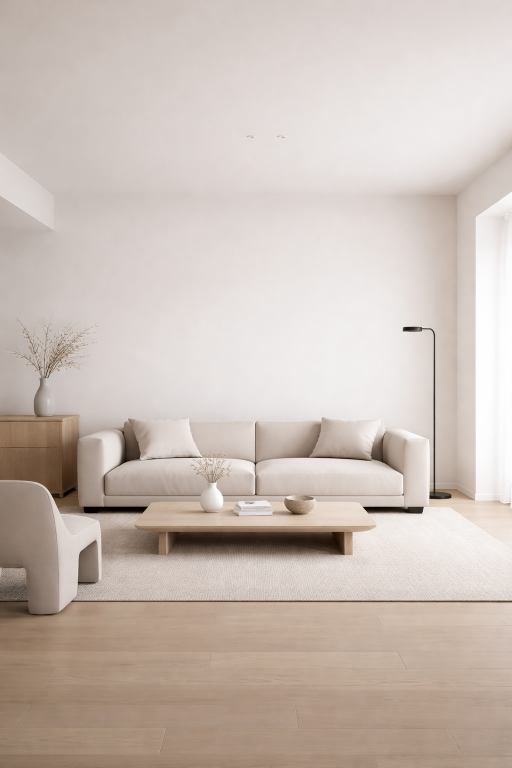
Furniture with clean and straight lines gives your living room a modern and minimal appearance. Avoid overly detailed or decorative designs.
For example, a simple rectangular table looks more organized than a heavily designed one. This keeps the overall look neat and balanced.
17. Accent Piece Focus
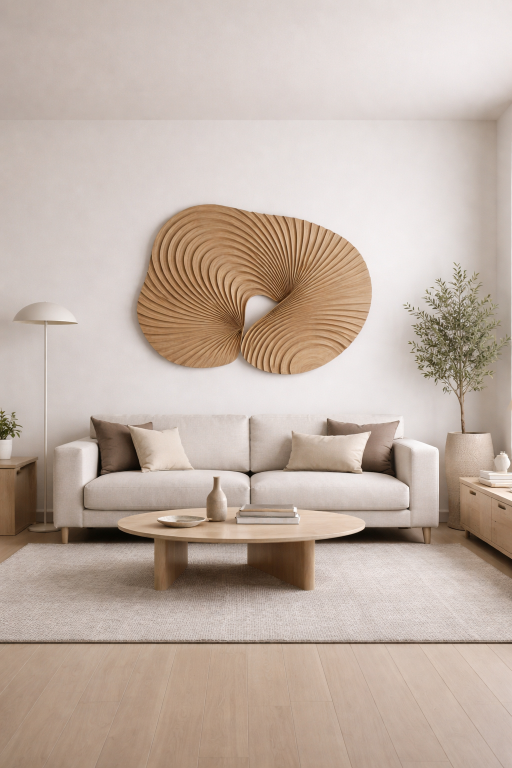
Instead of using many small decor items, focus on one accent piece. This could be a lamp, artwork, or decor item.
For example, a unique lamp can become the highlight of your room. This approach keeps your design simple while still making it interesting.
18. Minimal Textures
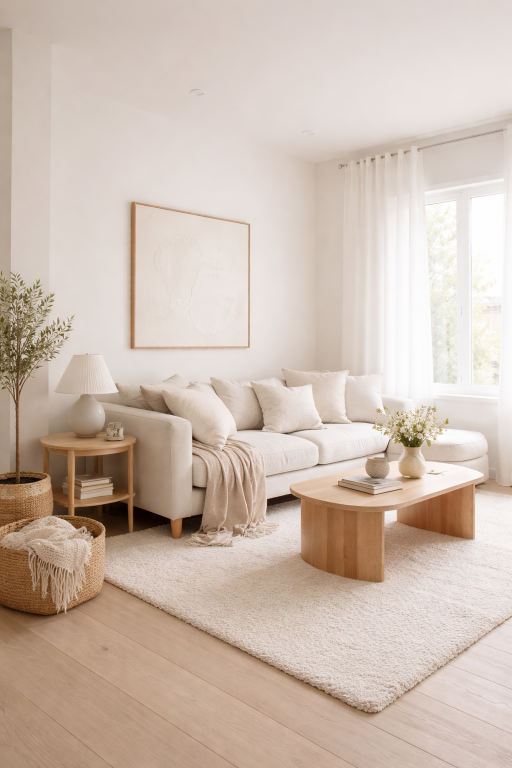
Adding a few soft textures like cushions or throws makes your living room comfortable without adding clutter.
For example, a soft blanket on your sofa creates a cozy feeling when your family sits together. It adds warmth without making the space look busy.
19. Balanced Layout
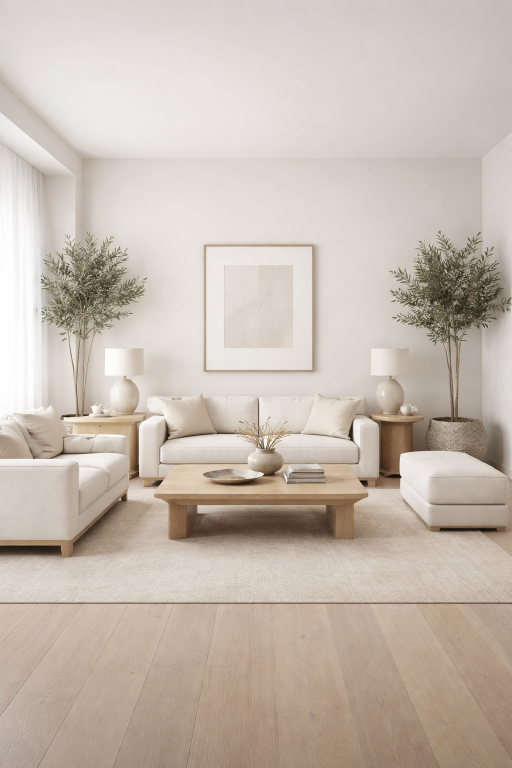
Balance is important in minimal design. Arrange furniture evenly to create harmony.
For example, placing chairs on both sides of a table creates a balanced look. This makes your living room feel organized and visually pleasing.
20. Daily Declutter Habit
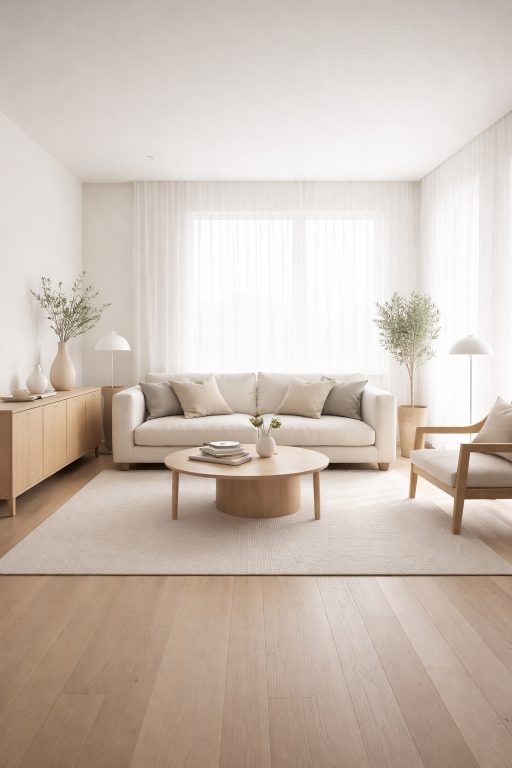
Minimal design is not just about setup, it is about maintenance. Regularly removing unnecessary items keeps your space clean.
For example, at the end of the day, putting things back in place helps maintain order. This simple habit keeps your living room peaceful and stress-free.
Practical Tips for Styling a Minimal Living Room
Start by removing items you do not use daily. This instantly creates more space and clarity. Then focus on choosing furniture that fits your room size instead of filling every corner.
Use light colors and natural lighting to enhance openness. Keep decorations simple and meaningful. Remember, minimal design is about creating a space that feels calm and easy to live in.
Common Mistakes to Avoid
Avoid making your room feel empty instead of minimal. A completely empty room can feel cold and uncomfortable.
Do not ignore comfort. Your living room should still feel cozy and inviting, not just visually clean.
Conclusion
Minimal living room design ideas help you create a space that is simple, functional, and peaceful. By focusing on essential elements and removing clutter, you can transform your living room into a relaxing environment.
With the right balance of simplicity and comfort, your living room can become a place where you enjoy spending time every day.
FAQs
1. What is a minimal living room
A minimal living room focuses on simplicity, fewer items, and functional design.
2. How do I make my living room minimal
Start by decluttering and choosing simple furniture with neutral colors.
3. Is minimal design good for small spaces
Yes, it makes small rooms feel bigger and more open.
4. What colors are best for minimal living rooms
Neutral colors like white, beige, and gray work best.
5. How can I keep my living room minimal daily
Avoid clutter and return items to their place regularly.